Arabic: Your Child’s Key to Understanding the Deen
Arabic supports direct engagement with Quranic words, prayer, Islamic vocabulary, and scholarly explanations, while translation remains a helpful bridge.

Direct answer
Arabic supports direct engagement with Quranic words, prayer, Islamic vocabulary, and scholarly explanations, while translation remains a helpful bridge.
Why this matters for your family
Arabic grows through frequent, meaningful exposure. A short daily routine is usually more effective than one long, exhausting session.
Arabic supports direct engagement with Quranic words, prayer, Islamic vocabulary, and scholarly explanations, while translation remains a helpful bridge. Use family conversations, prayer, shopping, school, and bedtime to apply the new word, value, or verse naturally.

Practical steps parents can start today
Connect the lesson to real life
Use family conversations, prayer, shopping, school, and bedtime to apply the new word, value, or verse naturally.
Attach learning to a fixed cue
Place the routine after a stable event such as breakfast, Maghrib, or bedtime. The cue reduces daily negotiation.
Use short, repeatable audio
Choose a clear recording of one small passage. Listen, pause, imitate, and compare instead of playing long audio passively.
Let the child see you learning
Read, revise, and ask questions in front of your child. A visible family model makes learning part of normal life.
Use a visible progress tracker
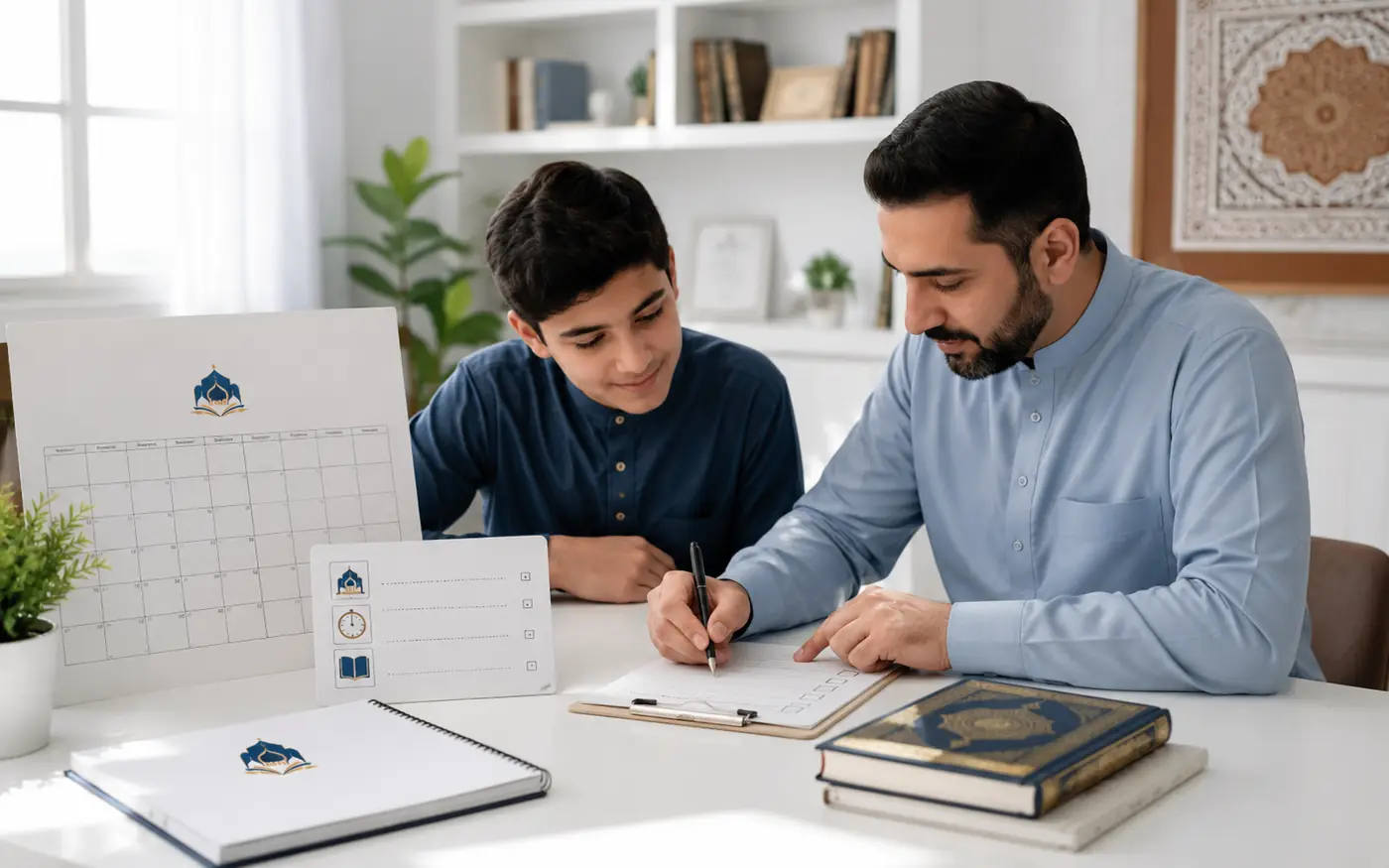
Track attendance, review, and one skill—not perfection. A simple weekly chart makes invisible progress easier to notice.
A simple family plan
- 1
2 minutes: reconnect with yesterday’s skill.
- 2
4 minutes: practise one new target.
- 3
2 minutes: use it in recitation or conversation.
- 4
2 minutes: praise effort and record the next target.
Common mistakes to avoid
- Adding too much content at once, then interpreting tiredness as laziness or weak ability.
- Talking only about mistakes and leaving correct effort unnoticed.
- Changing the routine every day so the child never knows when or how learning will happen.
Trusted Islamic references
Use these references for verified Quranic text, authentic hadith, and scholarly guidance. Detailed personal rulings should be referred to a qualified scholar.
Frequently asked questions
How quickly should parents expect progress with “Arabic: Your Child’s Key to Understanding the Deen”?
Look for small signs over four to eight consistent weeks: better willingness, fewer prompts, improved recall, or clearer performance. Progress is rarely perfectly linear.
What should I do when my child resists?
Reduce the task, offer two acceptable choices, check tiredness and timing, and finish with one achievable success. Persistent resistance may signal a level or teaching-method mismatch.
How much should a parent help during an online lesson?
Prepare the space and support behaviour, but allow the teacher to hear the child’s real level. Save extra corrections for the teacher’s requested practice target.
Give your child a calm, structured learning start
Book a free assessment lesson and receive a learning recommendation suited to your child’s age, level, and goals.

العربية مفتاح طفلك لفهم الدين
تدعم العربية الفهم المباشر لألفاظ القرآن والصلاة والمصطلحات الإسلامية وكلام أهل العلم، مع بقاء الترجمة جسرًا نافعًا.
الإجابة المباشرة
تدعم العربية الفهم المباشر لألفاظ القرآن والصلاة والمصطلحات الإسلامية وكلام أهل العلم، مع بقاء الترجمة جسرًا نافعًا.
لماذا يهم هذا الموضوع أسرتك؟
تنمو العربية بالتعرض المتكرر ذي المعنى، وغالبًا تكون الدقائق اليومية القصيرة أنفع من جلسة طويلة مرهقة.
تدعم العربية الفهم المباشر لألفاظ القرآن والصلاة والمصطلحات الإسلامية وكلام أهل العلم، مع بقاء الترجمة جسرًا نافعًا. استخدم حوار الأسرة والصلاة والتسوق والمدرسة ووقت النوم لتطبيق الكلمة أو القيمة أو الآية بصورة طبيعية.
خطوات عملية يبدأ بها ولي الأمر اليوم
اربط الدرس بالحياة اليومية
استخدم حوار الأسرة والصلاة والتسوق والمدرسة ووقت النوم لتطبيق الكلمة أو القيمة أو الآية بصورة طبيعية.
اربط التعلم بموعد ثابت
ضع الروتين بعد حدث ثابت مثل الإفطار أو المغرب أو ما قبل النوم؛ فالإشارة الثابتة تقلل الجدل اليومي.
استخدم مقطعًا صوتيًا قصيرًا قابلًا للتكرار
اختر تسجيلًا واضحًا لمقطع صغير: استمع، وتوقف، وقلّد، وقارن بدل تشغيل مقاطع طويلة بلا تفاعل.
دع الطفل يراك تتعلم
اقرأ وراجع واسأل أمام طفلك؛ فالقدوة الظاهرة تجعل التعلم جزءًا طبيعيًا من حياة البيت.
استخدم متابعة بصرية للتقدم
تابع الحضور والمراجعة ومهارة واحدة، لا الكمال؛ فالجدول الأسبوعي البسيط يُظهر التقدم غير الملحوظ.
خطة أسرية بسيطة
- 1
دقيقتان: استرجاع مهارة الأمس.
- 2
4 دقائق: تدريب هدف جديد واحد.
- 3
دقيقتان: تطبيقه في التلاوة أو الحوار.
- 4
دقيقتان: مديح الجهد وتسجيل الهدف التالي.
أخطاء شائعة ينبغي تجنبها
- إضافة كمية كبيرة دفعة واحدة، ثم تفسير الإرهاق على أنه كسل أو ضعف قدرة.
- الحديث عن الأخطاء وحدها مع تجاهل الجهد الصحيح والتحسن.
- تغيير الروتين يوميًا حتى لا يعرف الطفل متى أو كيف سيبدأ التعلم.
مراجع إسلامية موثوقة
تُستخدم هذه المراجع للنص القرآني الموثوق، والتحقق من الأحاديث، والرجوع إلى توجيهات أهل العلم. أما الفتوى الخاصة بحالة معينة فتُسأل فيها جهة علمية مؤهلة.
أسئلة شائعة
متى يتوقع ولي الأمر ظهور نتيجة في موضوع «العربية مفتاح طفلك لفهم الدين»؟
ابحث عن علامات صغيرة خلال أربعة إلى ثمانية أسابيع من الانتظام، مثل زيادة الاستعداد أو قلة التذكير أو تحسن الاسترجاع أو وضوح الأداء. التقدم لا يسير دائمًا في خط مستقيم.
ماذا أفعل عندما يرفض الطفل؟
خفف المهمة، وقدّم خيارين مقبولين، وافحص التعب ووقت التدريب، واختم بنجاح صغير. وقد يدل الرفض المستمر على أن المستوى أو طريقة التعليم غير مناسبة.
كم يتدخل ولي الأمر أثناء الحصة الأونلاين؟
هيئ المكان وادعم السلوك، لكن اترك المعلم يسمع المستوى الحقيقي للطفل، واجعل تدريب البيت في الهدف الذي يحدده المعلم.
امنح طفلك بداية تعليمية هادئة ومنظمة
احجز حصة تقييم مجانية واحصل على توصية تعليمية تناسب عمر طفلك ومستواه وأهدافه.
L’arabe : une clé pour comprendre la religion
L’arabe facilite l’accès aux mots du Coran, à la prière, au vocabulaire islamique et aux explications savantes, tandis que la traduction reste un pont utile.
Réponse directe
L’arabe facilite l’accès aux mots du Coran, à la prière, au vocabulaire islamique et aux explications savantes, tandis que la traduction reste un pont utile.
Pourquoi cela compte pour votre famille
L’arabe progresse grâce à une exposition fréquente et porteuse de sens. Une courte routine quotidienne est souvent plus efficace qu’une longue séance fatigante.
L’arabe facilite l’accès aux mots du Coran, à la prière, au vocabulaire islamique et aux explications savantes, tandis que la traduction reste un pont utile. Utilisez les conversations familiales, la prière, l’école et le coucher pour appliquer naturellement le nouveau mot ou la nouvelle valeur.
Des actions pratiques à commencer aujourd’hui
Relier la leçon à la vie réelle
Utilisez les conversations familiales, la prière, l’école et le coucher pour appliquer naturellement le nouveau mot ou la nouvelle valeur.
Relier l’apprentissage à un repère fixe
Placez la routine après un événement stable comme le petit-déjeuner, le Maghrib ou le coucher afin de réduire les négociations.
Utiliser un court audio répétable
Choisissez un enregistrement clair d’un court passage : écouter, arrêter, imiter et comparer.
Laisser l’enfant vous voir apprendre
Lisez, révisez et posez des questions devant votre enfant. Un modèle familial visible rend l’apprentissage naturel.
Utiliser un suivi visuel
Suivez l’assiduité, la révision et une compétence, pas la perfection. Un tableau hebdomadaire rend les progrès visibles.
Un plan familial simple
- 1
2 min : reprendre la compétence d’hier.
- 2
4 min : travailler un nouvel objectif.
- 3
2 min : l’utiliser dans la récitation ou la conversation.
- 4
2 min : valoriser l’effort et noter la prochaine cible.
Erreurs fréquentes à éviter
- Ajouter trop de contenu d’un coup puis confondre fatigue, paresse et manque de capacité.
- Parler uniquement des erreurs sans remarquer l’effort correct ni les progrès.
- Changer la routine chaque jour au point que l’enfant ne sache jamais quand ni comment apprendre.
Références islamiques fiables
Ces références servent à consulter le texte coranique fiable, les hadiths authentifiés et les orientations savantes. Les cas personnels détaillés doivent être soumis à une personne de science qualifiée.
Questions fréquentes
Quand attendre des progrès pour « L’arabe : une clé pour comprendre la religion » ?
Cherchez de petits signes après quatre à huit semaines régulières : plus de disponibilité, moins de rappels, un meilleur rappel ou une performance plus claire. Le progrès n’est pas toujours linéaire.
Que faire lorsque l’enfant refuse ?
Réduisez la tâche, proposez deux choix acceptables, vérifiez la fatigue et l’horaire, puis terminez par une petite réussite. Un refus durable peut signaler un niveau ou une méthode inadaptés.
Jusqu’où le parent doit-il intervenir pendant un cours en ligne ?
Préparez l’espace et soutenez le comportement, mais laissez l’enseignant entendre le niveau réel de l’enfant. Travaillez ensuite la priorité indiquée par l’enseignant.
Offrez à votre enfant un départ calme et structuré
Réservez une séance d’évaluation gratuite et recevez une recommandation adaptée à son âge, son niveau et ses objectifs.